The science
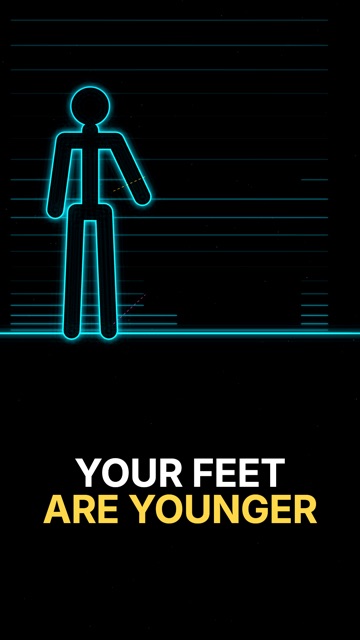
A small magnet can lift a paperclip against the pull of the entire Earth, because gravity is by far the weakest of the fundamental forces: between two protons, their electric repulsion is about 10³⁶ times stronger than their gravitational attraction. This video follows gravity from the Apollo 15 hammer-and-feather drop on the Moon (2 August 1971), through Einstein's bending of space and time (seen in the 1919 eclipse, measured between clocks 33 centimetres apart in 2010, and corrected for every day by GPS), Henry Cavendish's 1797–98 torsion-balance experiment, which first weighed the Earth, to the hierarchy problem, the idea that gravity looks weak because it spreads into extra dimensions, and the gravitational waves that tested it.
That idea is a hypothesis, not established physics. Nima Arkani-Hamed, Savas Dimopoulos and Gia Dvali proposed large extra dimensions in 1998; Lisa Randall and Raman Sundrum proposed a warped extra dimension in 1999. Neither has been confirmed: a 2020 torsion-balance test at the University of Washington found Newton's inverse-square law holding at separations down to 52 micrometres, searches at the Large Hadron Collider have found no sign of extra dimensions so far, and the gravitational waves from the 2017 neutron-star merger GW170817 arrived as strong as three dimensions of space predict, ruling out gravity leaking away over those distances.
Animations are drawn in code from the real numbers; the engraving-style scene of Cavendish's shed is an AI illustration, and the chirp is a recreation of the real signal's sweep, raised in pitch so phone speakers can play it.
Sources
- Cavendish, H. (1798). Experiments to determine the density of the Earth. Philosophical Transactions of the Royal Society 88, 469–526.
- Arkani-Hamed, N., Dimopoulos, S. & Dvali, G. (1998). The hierarchy problem and new dimensions at a millimeter. Physics Letters B 429, 263–272.
- Randall, L. & Sundrum, R. (1999). A large mass hierarchy from a small extra dimension. Physical Review Letters 83, 3370.
- Dyson, F. W., Eddington, A. S. & Davidson, C. (1920). A determination of the deflection of light by the Sun's gravitational field. Philosophical Transactions of the Royal Society A 220, 291–333.
- Chou, C. W., Hume, D. B., Rosenband, T. & Wineland, D. J. (2010). Optical clocks and relativity. Science 329, 1630–1633.
- Ashby, N. (2003). Relativity in the Global Positioning System. Living Reviews in Relativity 6, 1.
- Abbott, B. P. et al. (2016). Observation of gravitational waves from a binary black hole merger. Physical Review Letters 116, 061102.
- Abbott, B. P. et al. (2017). Gravitational waves and gamma-rays from a binary neutron star merger: GW170817 and GRB 170817A. The Astrophysical Journal Letters 848, L13.
- Pardo, K., Fishbach, M., Holz, D. E. & Spergel, D. N. (2018). Limits on the number of spacetime dimensions from GW170817. Journal of Cosmology and Astroparticle Physics 2018(07), 048.
- Lee, J. G., Adelberger, E. G., Cook, T. S., Fleischer, S. M. & Heckel, B. R. (2020). New test of the gravitational 1/r² law at separations down to 52 μm. Physical Review Letters 124, 101101.
- NASA, Apollo 15 hammer-feather drop (NSSDC).